
How Do Industrial Burners Impact Fuel Efficiency and Emissions?
- Raj Kothari
- Feb 23
- 5 min read

The Complete Guide to Optimizing Industrial Combustion Systems for Performance, Cost Savings & Environmental Compliance
In today’s fast-evolving industrial landscape, fuel efficiency, energy savings, and emission control are no longer optional they are critical business priorities. From manufacturing plants and food processing units to textile industries and power generation facilities, industrial burners play a central role in how efficiently fuel is consumed and how much pollution is released into the atmosphere.
But how exactly do industrial burners impact fuel consumption, operational cost, and emissions control? And more importantly, how can industries optimize burner performance to reduce fuel wastage while meeting environmental norms?
Let’s explore this in depth.
Understanding Industrial Burners and Their Role in Combustion
An industrial burner is a device designed to mix fuel and air in the correct ratio and ignite the mixture to generate heat efficiently. These burners are widely used in:
Industrial boilers
Furnaces
Thermic fluid heaters
Kilns
Dryers
Incinerators
The performance of a burner directly determines:
Fuel efficiency
Combustion quality
Heat transfer effectiveness
Emission levels
Maintenance costs
In simple words, the burner is the heart of any combustion system. If it performs poorly, the entire system becomes inefficient.
The Direct Link Between Industrial Burners and Fuel Efficiency
1. Air-Fuel Ratio Optimization
One of the most critical factors affecting fuel efficiency in industrial boilers is the air-fuel ratio.
Too much air → Heat loss through exhaust gases
Too little air → Incomplete combustion, higher carbon monoxide emissions
Modern industrial burner systems use advanced controls to maintain the ideal stoichiometric combustion ratio, ensuring maximum energy extraction from fuel.
Proper air-fuel management leads to:
Lower fuel consumption
Reduced operating costs
Stable flame performance
Improved thermal efficiency
2. Burner Design and Atomization Technology
The design of the burner significantly impacts how effectively fuel is burned.
High-quality burner components such as:
Precision nozzles
Flame monitoring systems
Fuel regulators
Ignition transformers
ensure optimal fuel atomization. Better atomization means:
Smaller fuel droplets
Better mixing with air
Complete combustion
Higher combustion efficiency
Efficient atomization reduces unburned hydrocarbons and improves energy efficiency in industrial heating systems.
3. Modulating Burners vs. On/Off Burners
Traditional on/off burners operate at full capacity or shut down completely. This causes:
Frequent cycling
Temperature fluctuations
Higher fuel wastage
In contrast, modulating industrial burners adjust flame intensity based on demand. Benefits include:
Consistent heat output
Lower fuel consumption
Reduced wear and tear
Improved thermal efficiency
This directly impacts long-term industrial energy savings.
How Industrial Burners Affect Emissions
Industrial emissions are heavily regulated due to environmental concerns. Improper combustion increases:
Carbon monoxide (CO)
Nitrogen oxides (NOx)
Sulfur oxides (SOx)
Unburned hydrocarbons
Let’s understand how burner performance influences emissions.
1. Incomplete Combustion and Carbon Emissions
When combustion is incomplete due to poor air-fuel mixing or faulty components, it leads to:
High CO levels
Black smoke
Increased particulate matter
Reduced fuel efficiency
A well-maintained burner ensures complete combustion, reducing:
Carbon emissions
Industrial air pollution
Stack losses
2. NOx Formation and Temperature Control
Nitrogen oxides (NOx) are formed at high flame temperatures. Poorly designed burners produce:
Higher peak temperatures
Increased NOx emissions
Advanced burner systems use:
Staged combustion
Flue gas recirculation
Low NOx burner technology
These technologies reduce flame temperature peaks and minimize NOx emissions control challenges.
3. Role of Burner Controls in Emission Reduction
Modern industrial combustion control systems use sensors and automation to:
Monitor oxygen levels
Adjust fuel flow
Maintain flame stability
Detect irregularities
Brands like Brahma ignition systems, Danfoss fuel pumps, Siemens burner controls, and Madas gas valves help ensure:
Safe combustion
Precise regulation
Reduced emission output
Reliable burner components play a major role in achieving compliance with environmental regulations.
The Cost Impact of Inefficient Industrial Burners
Many industries underestimate the cost impact of inefficient combustion.
Even a 2–3% drop in combustion efficiency can lead to:
Massive annual fuel losses
Higher production costs
Increased carbon footprint
Frequent breakdowns
Consider this:
If a plant spends ₹5 crore annually on fuel, even a 5% inefficiency equals ₹25 lakh in losses per year.
That’s why investing in proper burner components and regular maintenance is essential for long-term cost optimization.
Key Factors That Improve Fuel Efficiency and Reduce Emissions
1. Regular Burner Maintenance
Routine checks ensure:
Clean nozzles
Proper ignition
Correct air-fuel mixture
Stable flame detection
Preventive maintenance improves:
Boiler efficiency
Fuel savings
Equipment lifespan
Emission compliance
2. High-Quality Burner Components
Using reliable brands for burner parts makes a significant difference.
Components such as:
Ignition transformers
Flame sensors
Gas pressure regulators
Solenoid valves
Fuel pumps
must be sourced from trusted suppliers.
Using original and certified components enhances:
System reliability
Combustion efficiency
Environmental safety
3. Proper Installation and Calibration
Even the best burner can perform poorly if improperly installed.
Correct:
Alignment
Fuel pressure setting
Air damper adjustment
Control system calibration
ensures optimal performance.
The Growing Importance of Energy Efficiency in India
In India, industries are under increasing pressure to:
Reduce fuel consumption
Lower operational costs
Comply with environmental norms
Improve sustainability metrics
Government regulations and environmental agencies are tightening emission standards.
As a result, industries are upgrading to:
Energy-efficient industrial burners
Low emission combustion systems
Advanced burner management systems
The shift toward industrial energy optimization is no longer a trend it’s a necessity.
Industrial Burners in Different Industries
1. Manufacturing Sector
Used in:
Metal processing
Chemical plants
Textile units
High-performance burners ensure consistent temperature control and lower fuel costs.
2. Food Processing Industry
Accurate temperature regulation ensures:
Product quality
Energy savings
Reduced wastage
Efficient burners directly impact production efficiency.
3. Power Plants and Large Boilers
Here, even minor inefficiencies lead to massive financial losses.
Optimized burner systems ensure:
Maximum heat output
Minimal fuel waste
Reduced greenhouse gas emissions
How Mahalaxmi Sales Supports Industrial Efficiency
When it comes to sourcing high-quality industrial burner components, choosing the right supplier makes all the difference.
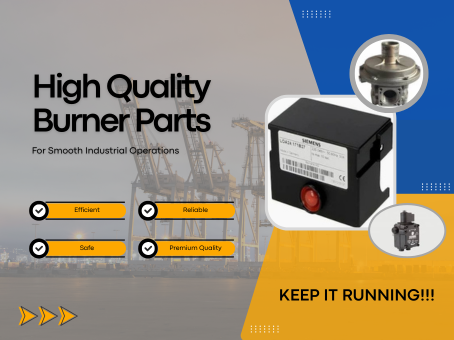
Mahalaxmi Sales is a trusted distributor and supplier of premium burner parts and combustion system components. The company supplies products from globally recognized brands such as:
DISTRIBUTORS-
Brahma
Danfoss
STOCKIST-
Siemens
Madas
Vanaz
By offering genuine and reliable components, Mahalaxmi Sales helps industries:
Improve combustion efficiency
Reduce fuel losses
Lower maintenance costs
Achieve emission compliance
Ensure operational safety
As a supplier (not manufacturer), Mahalaxmi Sales bridges the gap between high-quality global brands and Indian industrial requirements.
Why Choosing the Right Burner Components Matters?
Cheap or low-quality components may initially reduce costs but can result in:
Higher fuel consumption
Frequent breakdowns
Unsafe combustion
Increased emissions
Regulatory penalties
Investing in certified burner parts ensures:
Long-term savings
Stable operations
Lower environmental impact
The Future of Industrial Combustion Systems
The future is moving toward:
Smart burner management systems
IoT-based combustion monitoring
AI-driven fuel optimization
Ultra-low emission burners
Sustainable fuel integration
Industries adopting advanced industrial heating solutions will benefit from:
Reduced energy bills
Higher efficiency
Improved sustainability ratings
Competitive advantage
Conclusion
Industrial burners are more than just heating devices they are central to:
Operational efficiency
Cost management
Environmental responsibility
Regulatory compliance
A properly optimized burner system can:
Increase fuel efficiency
Reduce industrial emissions
Lower carbon footprint
Enhance productivity
For industries looking to upgrade their combustion systems or source reliable burner components, working with experienced suppliers like Mahalaxmi Sales ensures access to genuine, high-performance products from globally trusted brands.
In today’s competitive and environmentally conscious world, improving burner efficiency is not just about saving fuel it’s about building a sustainable and profitable future.


Comments